Web Analytics
Showing posts with label Nature watch. Show all posts

Friday, June 29, 2012

Gardens at Srinagar (Kashmir) – Chashme Shahi


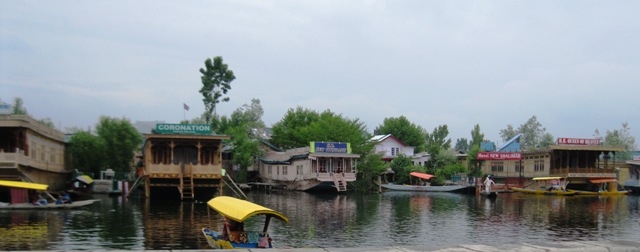
Until the recent past, we had all wooden bridges over rivers, rivulets and canals which got dismantled and replaced with concrete ones. The highway to Jammu is getting widened and a railway line is fast coming up. We shall see a direct train service from Srinagar within 2 years. The number of tourists visiting Kashmir this year is  phenomenal and all past records got broken. We do not have beggary as such but there are few who, to remain lazy, avoid working and solicit alms. This was what our driver had to share with us enthusiastically. He was taking us for a local tour of Srinagar. We were passing through the narrow strip of the extensive Dal Lake, a little early in the morning. On the other bank of the lake we could see many of the house boats in a row and few shikaras (roofed boats) floating around. The road we were taking is referred to as the Marine Drive locally which offers an excellent view of the lake for the whole distance. Roads and the footpaths were exceptionally clean.


Shalimar, Chashme Shahi and Nishat are the names of the major parks at Srinagar which are all Mughal Gardens. All of them are located on the Eastern banks of the Dal Lake with a shore line of over 15 kilometres. On the rear side, there is the  Zabarwan mountain ranges with many springs that are the source of perennial water supply to the gardens below. The topography would have facilitated the development of these gardens, not only during the Mughal period but much much earlier. The city of Srinagar was founded by a king known as Pravarasena.


Before our vehicle could reach the tail end of the lake along with which the road went, our driver made a right turn on a road adjoining the Botanical Gardens and told us that we are approaching the Governor’s residence. The security positioned on the road made all of us to climb down leaving behind children. The vehicle moved on and we made our way on foot to catch our car at a distance. We could not understand the purpose of this exercise, may be security considerations. After a short distance from that point the famous Chashme Shahi stood before us. The same road leads to another place known as Pari Mahal which was a Buddhist Vihara once upon a time.

We were required to buy tickets for entry into this park, There were tourists from all parts of the country but strangely no foreigners. Kashmiri folk lore attributes the discovery of the natural spring to a women saint named ‘Rupa Bhawani’. Her family name or nick name was ‘Sahibi’ and therefore the spring waters came to be known as ‘Chashme Sahibi’. Over a period of time the name got corrupted and  is now known as ‘Chashme Shahi’. Shahi stands for being Royal. However the garden around the spring was developed in a systematic way at the instance of Ali Mardan, a Governor of the Mughals in that region.


The outlet of the spring waters has been encased in a small structure and the waters fall in a square shallow tank and from here  the water channel facilitates further flow downwards. There were many who were queuing up to have some mouthfuls of the spring water which is said to have medicinal properties. Some say it cures many kinds of stomach ailments. Normally spring water from the mountains is considered to contain minerals and supposed to be pure. Medicinal and/or magical attributions are simply an exaggerated view point. We also struggled our way to the spot wherefrom waters flowed out and filled couple of bottles. Definitely the water was much superior to the ones we buy (processed and bottled).


This is the rear view of the main entrance

The mountain slope seems to have been levelled up in three tiers (terraced) for the development of a beautiful garden. There are Chinar and Cypress trees at the far end. Some exotic flowering trees have also been spotted. The flower beds have seasonal flowers in bloom. Roses have been grown extensively but looking to the grandeur of the garden, the varieties available (4/5) seem to be inadequate. However, the blooms and greenery all around was very soothing and captivated us.

The crowd here is to get them photographed in the traditional attire


Interestingly, the gardeners  were offering the seeds of the seasonal flowers of all shades at a high price.  

Monday, February 6, 2012

In search of tranquility

City dwellers, in search of peace and solitude, keep certain places, closer to nature, identified, where they frequent during the week ends. While at Coimbatore, we were also exploring such avenues when we learnt about a water fall close by at a distance of about 30 kms. It is fondly called "Kovai Kurtalam" because it is said to resemble the famous Kurtalam falls of Tamilnadu, though a little smaller.    Coimbatore is referred to as "Kovai" in the vernacular parlance. The mountain stream culminating into a fall is under the foot hills of the western ghat mountain ranges, surrounded by rain forests. Since we had a full day to invest, we thought of visiting a place known as Isha Foundations Dhyana Linga, more or less on the same route. This centre is claimed to be  offering spiritual inner realisation. They have created a spherical structure with congenial atmosphere for meditation. However our focus was neither spirituality nor meditation but were simply drawn there out of our curiosity for some kind of appreciation of the activities thereat. The locale was quite cherish able. After having our lunch in their canteen, we drove out.
 
Now we were heading towards the "Kovai Kurtalam" water falls. There was an easy and direct approach but we preferred to reach there driving through the countryside, with winding roads, connecting obscure villages. One reason for this was availability of ample time and our own inner desire to understand the hinterland. On our way there were paddy fields becoming ready to be harvested followed by a plantation of Curry Leavs (Sweet Neem), Turmeric, Banana plantations, Areca nut Plantations and so on. It was really enjoyable to have a real feel of these crops growing in that area. We stopped at some places to capture the landscape in our cameras.


While passing through the outskirts of a village we could find an open shrine dedicated to the serpent Gods who are believed to protect the village from epidemics etc.  This is a kind of animal worship (zoolatry)/nature worship prevalent in the pre modern societies all over the world. This still continues notwithstanding the advent of all ‘isms.
 
There was a small town, the end of the habitational area, on the banks of a rivulet formed possibly by the same waterfall we were heading for. We had to cross a bridge beyond which lied the forest area with their check post and barricades. We had to buy our entry passes. 


The journey continued through the forest area with paddy fields in between and the mountains coming closer to us. Shortly we were inside the thickly forested zone and we found that people were required to park their vehicles in an opening created for the purpose.There were separate parking areas for four wheelers and two wheelers. Two wheelers were in much larger numbers.


From this point onwards we were required to walk down the distance of about 2 kilometres through the jungle path. Interestingly  the forest department people have created a suspension bridge with the support of the tall trees for quite a good distance. We thought of using it while returning. The walk also provided some beautiful sceneries of mountains and  water gushing down the hills. The wild growth on the pathway was also home to several insects. Some colourful spiders attracted our attention and we could not resist from approaching them for a closer view.


At the end of the pathway, to our left was the waters from the mountains making its way through the rocky surface and to cross over it we were to pass through a narrow bridge. Immediately thereafter there were stairs climbing deep down. We went up to a distance and had a glimpse of what could be expected at the end. The water has been made to fall down taking a broader shape for which some man made constructions were visible. We thought not to venture deep down fearing that we would need to exert a lot to come up. 


Instead we settled before the bridge and enjoyed looking at families, boys and girls who had made space for themselves, where ever they found it convenient.There were some monkeys too to keep company with.
 

Around 5.00 PM we thought of returning when my nephew joined us after his explorations. Some of the photographs here are his contributions. While walking down the jungle path we saw a sort of melee at a distance, for some one had thrown a pebble at a beehive and the bees in turn attacked a group. They ran for their lives while we stayed back for about 15 minutes.  When the bees seemed to be at peace we continued and reached the parking place. We drove out and reached Coimbatore after visiting an Emu farm en route.

Tuesday, January 17, 2012

Wild growing vegetation at Paliakara

All  my brothers and sisters had assembled at our native place in Kerala to celebrate our father’s 100th birthday during November 2011. I was moving around the outer fencing and I found a wild growth of vegetation surrounding it. There were some unknown creepers as well with their beautiful blooms. It became irresistible for me and I called for a camera to honour them. Some of them looked closer to what we grow at our homes. It is not that they never grew in the past, simply put it,  they remained ignored. Perhaps they were considered as outcastes. I would appeal to my knowledgeable friends to help in their identification. Here they go: 
 

Friday, December 23, 2011

Heliconia Rostrata

We derive a great deal of pleasure in watching our kids grow. The Wandering Mind has discovered a sculpture at Badami  depicting the four stages of childhood – first when the child is sleeping all the time, then, he begins crawling, then he stands, and finally, he does all sorts of gymnastics!. A similar feeling is also associated with our pets. The plants in our gardens are no exception.

Some six years back I brought few plants of Heliconia Rostrata (Lobster Claw) as they were not obtainable at this place. After two years they started flowering and I was thrilled to see them grow. In the recent years because of over growth of a Shivali/Night Jasmine tree I had to remove all other smaller plants beneath and transplant them in earthen pots. I specially bought a wider cement pot (24”) for planting Heliconias. They are there and new shoots are coming up but they refused to bear flowers during the last few years.

For the five years the monsoon was erratic and the rains were inadequate. Fortunately this year it was not so. We had very good rains and my Heliconias probably sensed this and happily started bearing flowers.

I tried to capture their stage wise growth  and they are here:


This last one seems to be the end of it.