Guest Post by my brother
P.N. Sampath Kumar,
Cochin Shipyard, Kochi.
Our family outing is normally during our son’s vacations for Onam, Christmas and summer holidays. We had originally scheduled a trip to Colombo and Kandy but could not make it as we had only 4 days available, which we thought will not be sufficient for a proper trip through Sri Lanka.
Wayanad came to our mind as it is a mixture of nature and history. Biodiversity is the richest. From Ernakulam (Kochi), we had two options to travel, either via Nilambur by own car or via Kozhikode (Calicut) by a combination of Train and Bus. We chose the Calicut route and decided against driving own car considering difficult weather and unknown terrains. We booked a room in a budget Resort called Haritagiri, located at Kalpetta as we had a reasonably good feedback.
 |
| The Tali temple |
There are only few choices for hard core veggies in Calicut; one such restaurant is “Dakshin” where we tried some Dosas.
There are plenty of buses operating between Calicut and Wayanad. The journey took 2.30 hrs through the mountains called Tamarassery Pass to reach Kalpetta. The Tamarassery pass has nine hairpin bends (our son counted all of them) and most of the time it will be foggy. It was really an enjoyable experience traveling through the wild.
Wayanad borders both Karnataka and Tamilnadu. There are three major towns in Wayanad which are are Kalpetta, Mananthavady and Sultan Battery. Majority of land is in the form of forest and the rest are either plantations or paddy fields. Coffee is abundantly cultivated. Wayanad ginger, Turmeric, lemongrass and honey are very famous in Kerala for their quality and flavour. Weather is cool round the year. Majority population are migrated farmers from elsewhere in search of fortune. It is said that the local tribals with their archery skills and guerilla warfare techniques supported Pazhassi Raja who fought the British in the 17th century. Pazhassi Raja’s tomb is situated at Mananthavady.
 |
| Haritagiri Resort |
Haritagiri is a good resort having a small swimming pool, bar, restaurant and an ayurvedic spa. Veggies will find it difficult to have a lunch in that restaurant as most of the cuisines are non vegetarian. There are resorts catering to the needs of different food habits. But we tried to explore small time eateries who serve proper vegetarian food. There are a couple of vegetarian messes run at Kalpetta. We tried one Swami’s mess in Kalpetta town run by an old Tamil Brahmin couple where we had a very good lunch with traditional north Kerala Brahimn recipes. One of the curries was made of dried jackfruit nut.
It is better to hire a tourist taxi to visit the spots in and around Wayanad. We hired a Tata Indica for 1½ days and they charged Rs.2700/-. For trips covering 4-5 KMs, etc.,It’s better to hire an autorikshaw which we found to be very cheap here. I have never paid more than Rs.10/- for a trip here. People are very friendly and so are the drivers.
The must visit places in Wayanad (according to tourist operators there) are Kuruva Dweep (which was closed then due to heavy rain), Chembra peak, Pookode lake, Muthanga Wild life sanctuary, Thirunelli, Pakshi pathalam, soochipara water falls, etc. But in consultation with our driver cum guide, we chalked out our own plan. He took us to take half way through the Chembra peak (6900 feet above sea level) up to where it is navigable by road. There is a watch tower up to which we went. The sight of the valleys of tea and coffee estates as also the view of Kalpetta from a distance was enchanting. Our son was happy for having been kissed by the clouds and was busy collecting pieces of clouds and put them in his shirt pocket.
 | ||
| The Chembra Peak |
 |
| Towards Chembra Peak |
 |
| Half way through Chembra Peak |
It takes at least half a day to finish this if you want to trek to the top. Ideally you need to have a small like minded group of 7-8 people, equipped with safety gadgets, water, food, etc. Half way further to the top, they say there is a heart shaped lake on the bank of which people take rest, drink water and have food before they climb further upto the peak.All these reminded me of the great Mana Sarovar and Kailash. We have consigned it for the next time
.
.
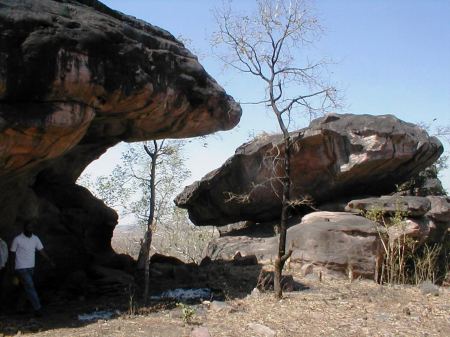
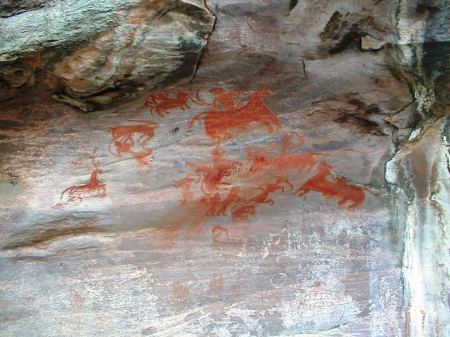
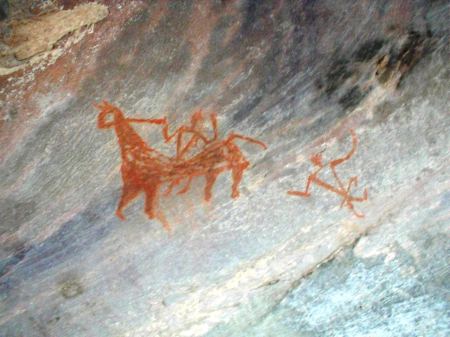
Our next destination was Edakkal caves, they are two natural caves located 1000 metres high on Ambukutty Mala (Hill) 25 km from Kalpetta on the way to Sultan Battery. They lie on an ancient trade route connecting the high mountains of Mysore to the Malabar coast ports. These caves were discovered by Fred- Fawcett, the then superintendent of police of the Malabar District, who was on a hunting trip to Wayanad in 1890. Our travel was through village roads and took an hour to reach the spot.
 |
| Way to the caves |
 |
| A beautiful Petroglyph |
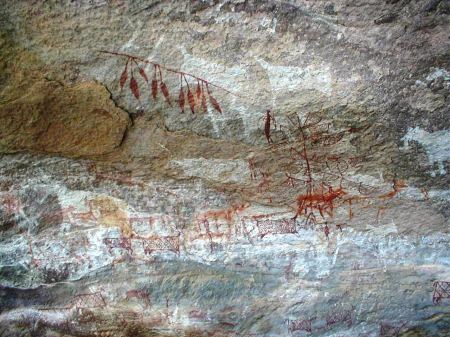
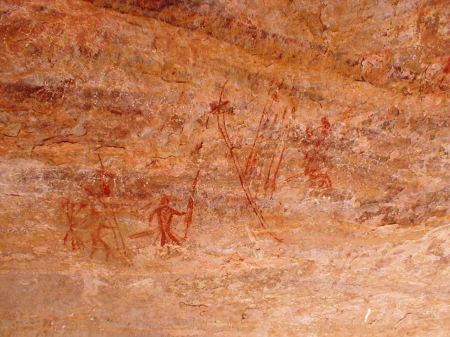
The cave is on top of a hill and one has to trek about 200 -250 meters steep to the top which requires a bit of mountaineering skill. We saw plenty of tourists visiting this place without much taste or understanding of history. There are carvings considered to be of BC 2000-6000 period (Neolithic i.e.stone age). The Kerala Archeological department maintains it and charges a little fee. Photography is allowed inside the cave. There are few pictures and some scripts engraved on the walls (Petroglyphs) of the cave. The pictures that we could make out were of a deer like creature and a human face with ornaments of possibly a tribal chief. It took us about 2 hours to finish. Short Tamil Brahmi inscriptions datable to around 3rd Century CE have also been discovered in these caves, the fifth one reading "Sri Vazhumi" is the latest discovery by M.R. Raghava Varier, retired Professor of Epigraphy, Calicut University (February 2012 update).
 |
| Photo by: Mohammed A |

The pookode lake is the most beautiful lake that we have ever seen in Kerala; resembles Nainital. This is located near a place called Vythiri. It is a natural lake in the midst of hills. Boating in the lake or walking around the lake is the major activity here.
 | |
| Kanthanpara falls, the safe one. |
 |
| Kanthanpara fall |
We avoided Suchipara falls because of the distance and chose a nearby fall called Kanthan para (lesser known to outside world) as suggested by our guide. It is a small fall in two stages. The first one is safer as it forms a pond where even children can safely play. Wayanad has a number of such un-spoilt spots.
 |
| At Kanthanpara |
Next day, we took a bus to travel to Tirunelli and Papanasam fall. One need to take a bus to Mananthavadi first and then to Tirunelli. Overall it takes 2 ½ hours to reach the temple. The route was exciting with views of the wild and occasional housing colonies of the tribal community beside the paddy fields. The road is through the proposed Elephant corridor. Not to mention, elephants are often sighted here on the road / road side. We found few deers.
The temple is dedicated to Lord Vishnu is surrounded by mountains and looks like Sabarimala temple. The temple looks very old. They say that there are mentions about this temple in the 10th century literatures. Tirunelli used to be an important town till 16th Century, along with Kodungallur and Mangalapuram. The temple is not architecturally very beautiful. When we visited, the inner side of the temple was getting renovated with teak wood roofs.The only interesting part I could notice is the plumbing arrangement made of granite stones to provide water to the temple from a distant mountain.
 |
| Tirunelli temple and the aquaduct |
People visit Tirunelli for two reasons; one to take a dip in the nereby stream called Papanasam and two, to consult tribal physicians practicing tribal medicine. In Papanasam pond (which is called brahma theertham), we found a carved stone in the middle depicting Sankhu, Chakra and Gada of the Loard Vishnu, where some poojas are offered. This also looked to be very old.
 | |
| Papanasam (Where sins are washed away) |
 |
| Symbolic representation of Lord Vishnu |
We returned to Ernakulam the third day via Calicut. Wayanad has a lot to offer for someone who is ready to walk and trek a lot. Good people blessed with good weather and nature.